Panic bars & closers · Metro Atlanta
Exit devices, panic bars and door closers for stores, restaurants, offices, warehouses and apartment buildings across metro Atlanta, installed, repaired and adjusted to what the fire marshal expects. Free written estimate; same-day service when the schedule allows.
What we do
A panic bar that has to be lifted and jiggled, or a closer that slams or stops short of the latch, is the kind of thing an inspector writes up and a lawsuit remembers. Both are usually an hour's work to put right.
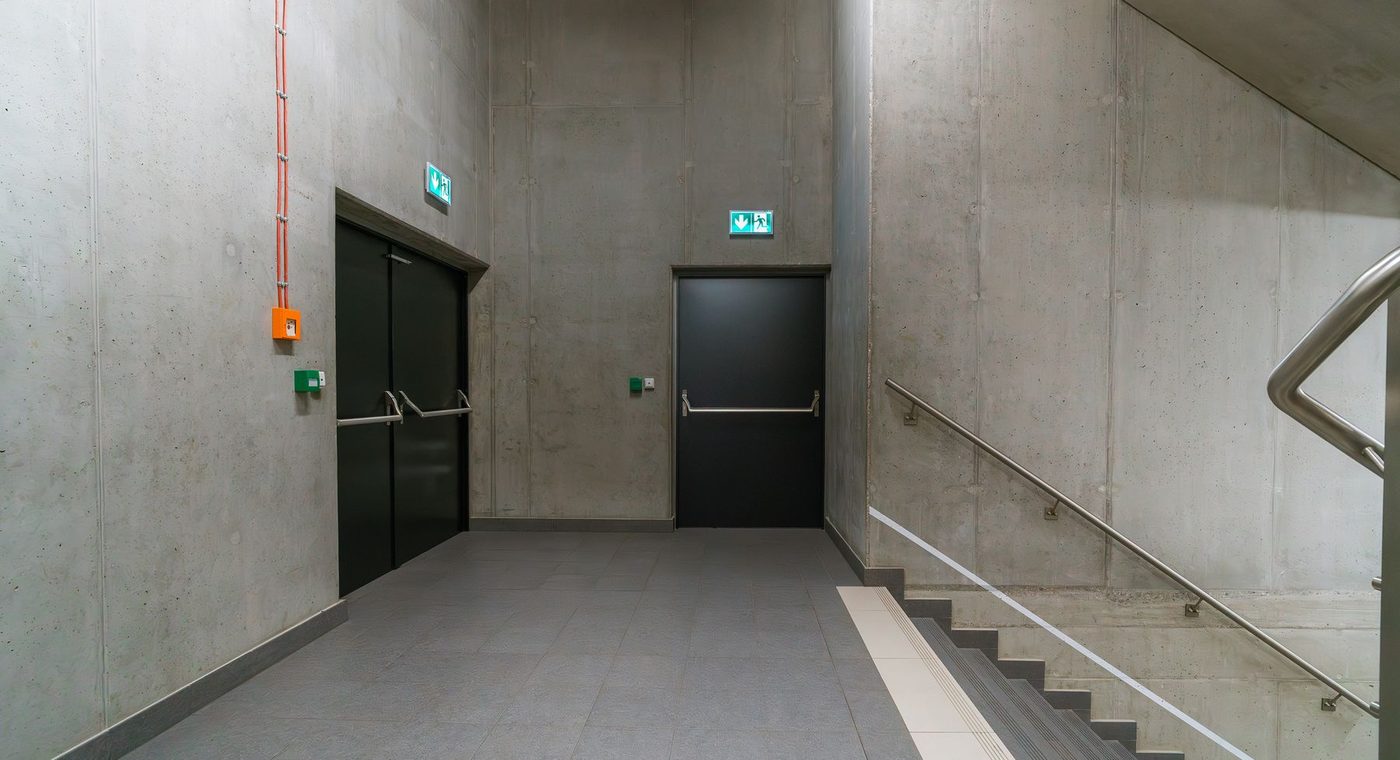
Rim, vertical-rod and mortise exit devices on single and paired doors: one push on the bar and the door opens, no key, no lever, no knowing which way to turn. Installed new, and replaced where the old one was never right.
On a fire-rated door the exit device has to be fire exit hardware, with no dogging, so the door stays latched whenever it closes. We read the label on the door before we choose the device.
Surface-mounted, concealed and floor closers, sized for the door's weight and the wind it faces. Installed new, and replaced when the old one leaks oil or has lost its sweep.
Sweep, latch speed and backcheck set so the door closes fully and latches without slamming. Most 'broken' closers we see are mis-adjusted or undersized, not dead.
Exit devices that sound an alarm when pushed, for a back door that staff keep propping open. Delayed-egress devices only where the code and the fire marshal allow them.
Narrow-stile and concealed-rod exit devices for aluminum glass doors, which take different hardware and a different mounting from a hollow metal door.
How we work
An exit device on a fire-rated door cannot be the same one as on a plain rear door; a device rated for a single door cannot go on a pair without rods or a mullion; a closer sized for an interior door will not hold an exterior door against the wind. We read the door's label, size up the opening and ask how many people leave through it, and then we say which device and closer belong there.

The bar has to release the latch with one push, at the height the fire marshal expects, with nothing else on the door that locks it from inside. That is the rule that gets exits written up: a deadbolt somebody added, a chain, a hasp. We remove what should not be there, fit the device, and leave the door opening with one motion from inside.

A closer has three adjustments, sweep, latch speed and backcheck, and a door that slams or stops short of the latch has one of them wrong. We set them in order, check the door against the wind if it is exterior, and test that the latch catches every time without a push. If the closer is undersized for the door, we say so rather than tuning it to the limit and coming back in a month.

Why homeowners choose us
An exit that works is the right device on the right door, installed the way the code assumes. On every job:

The quote
The device is most of the number, and it varies with the door: a plain rim device for a rear exit and a fire-rated vertical-rod pair on a corridor are very different hardware.
Good to know
Not seeing yours? Call (470) 691-8439 and just ask — we're happy to help.
It depends on what the building is used for and how many people are in it: places where a crowd gathers, and doors serving larger occupant loads, generally need panic hardware on the exits, and any exit door must open from inside without a key or special knowledge. The fire marshal for your city or county has the final word. We tell you what we see on a walkthrough, and we do not sell a panic bar to a door that does not need one.
Not on an exit door, if it locks people in. The usual answer is an exit device with an alarm, or one with an outside key cylinder so the door locks from outside and still opens with one push from inside. We fit those regularly on doors where staff had been propping the fire exit open.
Almost always. Slamming is the latch speed set too fast or the backcheck off; a door that stops short of the latch is the sweep too slow or the closer undersized. Adjustment is a short visit. A closer leaking oil is finished and gets replaced.
They look the same. Fire exit hardware is tested to stay latched in a fire and cannot be dogged, that is, held unlatched, so the door is always closed and latched. It belongs on fire-rated doors; a plain panic device belongs on exits that are not rated. Put the wrong one on and the door's rating is void, whatever the label on the door says.
Same-day when the schedule allows. We do not run an around-the-clock line, and we say that up front. A failed exit device is something to call about first thing, not to work around: an exit that does not open is one of the first things an inspector, or a lawyer, will look at.
Worth reading first
Which doors the code usually puts an exit device on, what the fire marshal checks when he looks at one, and the additions that fail most inspections.
Read it → Fire-rated doorsThe annual fire door inspection under NFPA 80: the label, the gaps, the closer, the latch, the glass, propping — and the six things that fail most doors.
Read it →Where we work
Based at 3850 Holcomb Bridge Rd, Peachtree Corners, GA 30092, serving the communities below.
Not sure if you're in range? Give us a call — if you're nearby, we'll take care of you.
Free estimate
Send the form and we call you back the same business day with a time for a walkthrough or a same-day visit. Every number you get from us is in writing.